
Construction • Manufacturing • Retail • Municipalities
Shipping Container Rental Cost in Michigan
⭐ 20+ Years Industry Experience
🏗️ Family-Owned in MI
📦 Delivery Statewide
Compare rental rates, container sizes, delivery factors, and project needs before choosing a storage container for your business, jobsite, property, or organization.
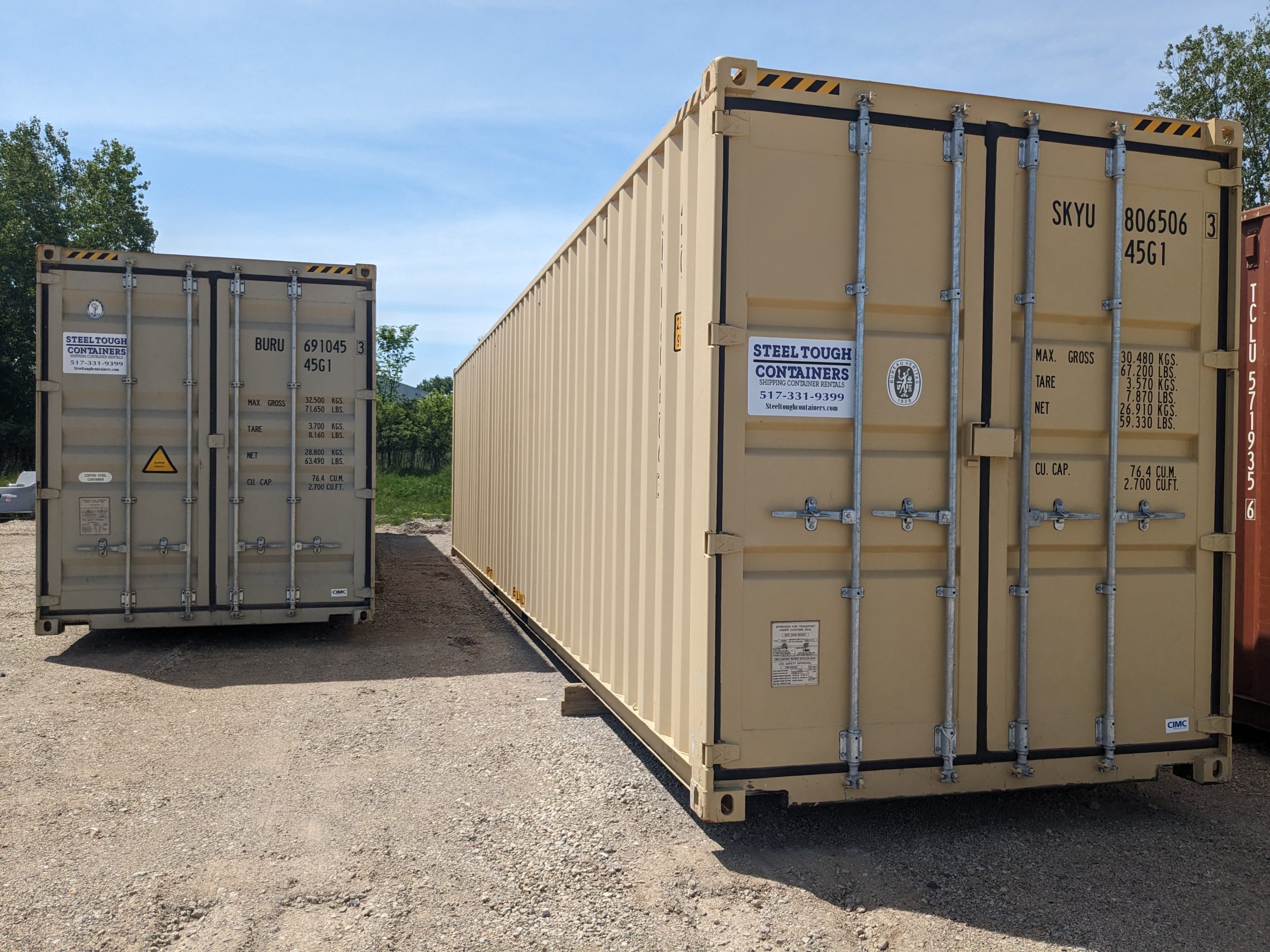
20′ Container
~160 sq ft • fits small jobs • wind & watertight
40′ Container
~320 sq ft • max capacity • ground level loading
Michigan Container Rental Pricing Guide
What Does It Cost to Rent a Shipping Container in Michigan?
Shipping container rental costs in Michigan depend on the container size, rental length, delivery distance, placement requirements, and how the container will be used.
For many Michigan businesses, contractors, schools, municipalities, farms, and property owners, renting a storage container is one of the fastest ways to add secure space without building a permanent structure. It can solve short-term overflow, jobsite storage, seasonal inventory, renovation storage, equipment protection, and commercial storage problems without a long-term commitment.
The important thing is understanding what actually affects the price. Two customers may both ask for a 40-foot storage container, but the final cost can vary based on location, access, delivery needs, rental term, and whether the container is being used for construction storage, commercial storage, retail overflow, farm storage, or temporary warehouse space.
This guide breaks down the major cost factors so you can compare shipping container rental rates in Michigan with a clearer picture of what you are paying for and what type of container makes sense for your project.
The Real Pricing Picture
Understanding Shipping Container Rental Costs in Michigan
Most shipping container rental prices are built around a monthly rental rate plus delivery and pickup. That sounds simple enough, because humanity does love pretending logistics are simple until a truck needs room to turn around.
In reality, the final price depends on the entire job. A container delivered to a wide-open commercial yard near Lansing may be easier and less expensive to place than a container delivered into a tight urban jobsite in Detroit or a rural property outside a smaller Michigan town.
The container itself is only one part of the equation. The rental term, transportation, placement conditions, door function, security needs, and availability can all affect the final quote. That is why most container companies prefer to price rentals after knowing where the container is going, how long it is needed, and what it will be storing.
Why Rental Pricing Is Not One-Size-Fits-All
A storage container used by a contractor for tools and materials has different requirements than a container used by a school district for temporary equipment storage, a manufacturer for overflow inventory, or a retail business preparing for seasonal demand.
For Michigan customers, weather also matters. Containers are often rented to protect equipment, supplies, documents, furniture, and inventory from rain, snow, wind, and jobsite exposure. A reliable container needs to be structurally sound, secure, weather-resistant, and placed correctly.
The cheapest monthly rate is not always the best value if the container is in poor condition, difficult to access, late to arrive, or poorly suited for the job. For most commercial and construction customers, the better question is not simply, “What is the lowest rental price?” It is, “What container will solve the storage problem without creating new headaches?”
Average Rental Rates
Average Shipping Container Rental Prices
Most Michigan shipping container rental quotes include a monthly rental charge, delivery, pickup, and any special placement requirements.
Exact rates can change based on market conditions, fuel costs, location, availability, and rental duration, but the following ranges give customers a practical starting point when budgeting for a storage container rental.
10-Foot Containers
Smaller containers may be useful for tight spaces, limited inventory, smaller projects, or temporary storage where access is limited.
- Good for compact sites
- Useful for small equipment storage
- Availability may vary by market
20-Foot Containers
A 20-foot container is one of the most common rental choices for contractors, small businesses, schools, and property owners.
- Strong balance of size and flexibility
- Easier to place than larger units
- Common for construction storage
40-Foot Containers
A 40-foot container gives businesses more storage capacity for inventory, equipment, materials, records, and larger projects.
- Best for higher-volume storage
- Common for commercial overflow
- Requires more delivery and placement space
Pricing Comparison
Shipping Container Rental Cost Comparison
| Container Type | Common Use | Typical Monthly Rental Range | Best For |
|---|---|---|---|
| 10-Foot Storage Container | Small storage needs, limited access areas, compact commercial use | Varies by availability and delivery location | Small sites, short-term storage, limited space |
| 20-Foot Storage Container | Jobsite storage, tools, materials, equipment, property storage | Often priced as a standard monthly rental plus delivery and pickup | Contractors, remodelers, schools, small businesses |
| 40-Foot Storage Container | Commercial overflow, large equipment, inventory, warehouse support | Usually higher than 20-foot rentals due to size and transport needs | Warehouses, manufacturers, retailers, larger jobsites |
| Specialty or Modified Containers | Custom access, specialty storage, modified commercial use | Depends on modifications, availability, and rental terms | Special projects, unique site needs, higher-security use |
Pricing ranges are general planning guidelines. Final rental pricing should be confirmed based on container size, location, availability, delivery distance, rental term, and site conditions.
Cost Factors
What Affects Storage Container Rental Cost?
Container rental pricing is rarely based on size alone. The total cost is shaped by how the container gets to the site, how long it stays there, what conditions the driver is dealing with, and whether the rental is simple or complicated.
A clear quote should account for the monthly rental rate, delivery, pickup, location, site access, and any special needs. This helps avoid surprise costs and makes it easier to compare rental options fairly.
Main Factors That Influence Cost
- Delivery distance: Longer routes can increase transportation costs.
- Rental length: Longer rental terms may affect monthly pricing.
- Container size: Larger containers usually cost more to transport and place.
- Site access: Tight spaces, soft ground, slopes, or obstacles can affect delivery.
- Availability: Demand can change by season, location, and container type.
- Use case: Construction, commercial, municipal, and retail storage may require different planning.
Jobsite Storage
Construction Site Storage Container Rentals
Construction storage is one of the most common reasons Michigan contractors rent shipping containers.
A secure container gives crews a practical place to store tools, equipment, fixtures, building materials, safety gear, documents, and jobsite supplies. Instead of hauling everything back and forth every day, contractors can keep the jobsite organized and reduce the risk of theft, weather damage, or lost productivity.
For construction companies, remodelers, electricians, plumbers, roofers, commercial builders, restoration contractors, and municipal project crews, container rentals often make sense because the need is temporary. The project may last a few weeks, several months, or longer, but the storage problem disappears when the job is complete.
Renting can also help contractors respond quickly when a new project starts. A container can be delivered to the site, used for the duration of the project, and removed when it is no longer needed. That flexibility is one reason jobsite storage container rentals remain popular across Michigan.
Need Rental Pricing for a Michigan Project?
Steel Tough Containers can help you compare container sizes, rental needs, delivery requirements, and the best storage option for your site.
Commercial Storage Solutions
Commercial Storage Container Rentals in Michigan
While construction companies are some of the largest users of shipping container rentals, many Michigan businesses also rely on containers as a flexible extension of their existing storage space.
Commercial storage containers give businesses secure, weather-resistant storage without the cost and commitment of leasing more warehouse space. They can be delivered directly to a business, facility, jobsite, school, municipal yard, farm, retail location, or industrial property.
For many companies, the value is simple: they need more room, but they do not need a permanent building. A rented shipping container provides temporary storage capacity without forcing the business into a long-term real estate decision.
Michigan businesses use storage container rentals during busy seasons, inventory transitions, renovation projects, warehouse overflow, facility moves, equipment upgrades, and temporary operational changes.
Retail Storage
Retail Inventory & Seasonal Storage
Retail businesses often experience inventory swings throughout the year, and those busy seasons can quickly expose a storage problem.
Holiday merchandise, seasonal products, promotional displays, outdoor equipment, landscaping supplies, building materials, event inventory, and temporary stock increases can all overwhelm available space.
Renting a shipping container gives retailers a practical way to expand storage capacity without moving operations, leasing a larger facility, or crowding the showroom or stockroom.
Garden Centers
Store seasonal inventory, tools, displays, outdoor products, and support equipment.
Retail Stores
Manage holiday inventory, sale merchandise, fixtures, overflow stock, and temporary storage needs.
Equipment Dealers
Protect attachments, parts, accessories, tools, supplies, and support inventory.
Industrial Applications
Manufacturing & Warehouse Storage
Manufacturers and warehouse operators often use shipping containers to support production increases, supply chain changes, facility renovations, inventory overflow, and equipment upgrades.
A container rental can help bridge the gap between current space and actual demand. Instead of rushing into a permanent expansion, a business can add secure on-site storage and adjust as needs change.
For industrial users, the convenience of keeping materials and equipment close to the facility can save time, reduce handling, and improve organization.
Common Manufacturing Uses
- Raw material storage
- Finished product overflow
- Maintenance supplies
- Equipment storage
- Temporary warehouse expansion
- Project-based inventory management
- Tooling, fixtures, and production support storage
Schools & Municipalities
Storage Containers for Schools, Municipalities & Public Facilities
Schools, municipalities, parks departments, public works teams, athletic departments, and public facilities often need secure storage without investing in permanent structures.
Storage containers provide practical space for maintenance equipment, seasonal supplies, athletic equipment, groundskeeping tools, emergency response supplies, records, event equipment, and operational inventory.
Because containers can be delivered, relocated, and removed as needs change, they offer flexibility for public organizations working within budgets and changing operational needs.
Schools
Useful for athletic equipment, maintenance tools, classroom overflow, event supplies, and renovation storage.
Municipalities
Helpful for public works equipment, seasonal materials, records, supplies, and emergency response inventory.
Public Facilities
Practical for parks, recreation departments, fairgrounds, community centers, and facility maintenance teams.
Delivery Matters
Delivery & Placement Considerations
One of the most overlooked factors in shipping container rental pricing is delivery and placement.
Even the right container can become a problem if there is not enough room for delivery, unloading, positioning, and future access. Before scheduling delivery, the site should be reviewed for access, ground conditions, drainage, overhead clearance, traffic flow, and how the container will be used once it is in place.
A 20-foot container may work well on tighter sites, while a 40-foot container needs more space for the truck, trailer, and placement. Ground conditions also matter. Soft soil, steep grades, tight turns, fences, wires, trees, parked vehicles, or narrow access points can all affect delivery planning.
- Site accessibility
- Truck turning radius
- Ground conditions
- Drainage concerns
- Future access requirements
- Security considerations
- Overhead clearance
- Container door swing and daily usability
Rent vs Buy
Should You Rent or Buy a Shipping Container?
One of the most common questions customers ask is whether renting or purchasing a container makes more sense.
The answer depends on how long the container will be needed, how often it will be used, whether it needs to be moved, and whether the business wants flexibility or ownership.
Renting May Be Best If:
- The project is temporary
- Storage needs may change
- Cash flow flexibility is important
- You want minimal commitment
- You need short-term jobsite storage
- You want the container removed when the project is done
Buying May Be Best If:
- The container will be used long-term
- You need permanent storage
- Custom modifications are planned
- You want full ownership
- The container becomes part of daily operations
- You expect to use it for years, not months
Need Help Choosing the Right Container?
Whether you’re comparing rental costs, evaluating container sizes, or deciding between renting and buying, Steel Tough can help you find the right solution.